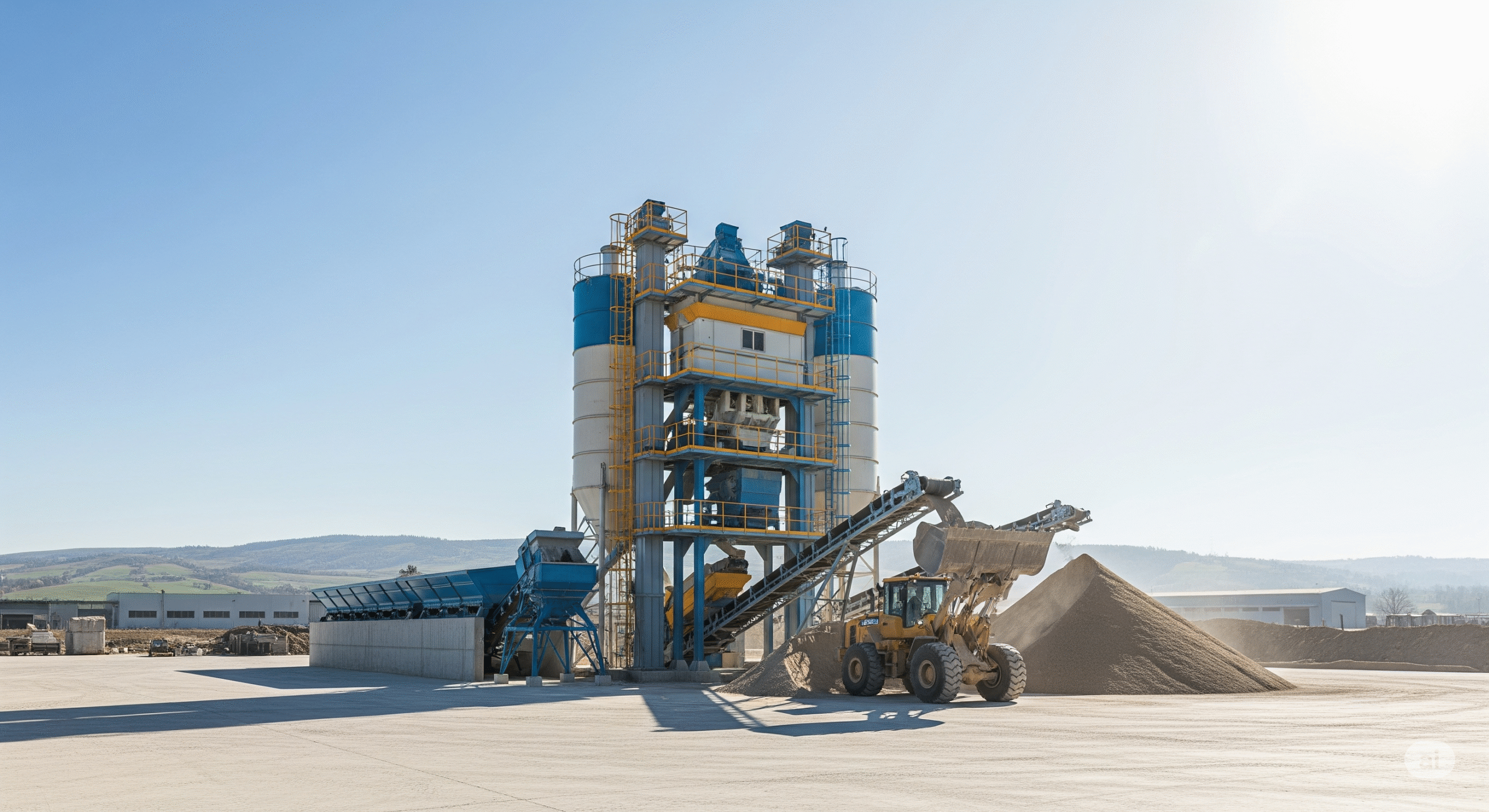
Anti-vibration pads under the skip bucket rails or support frame in a batching plant are used to isolate the structure from the dynamic impact and shaking created when the skip travels and dumps concrete.
Anti-vibration pads used on skip buckets in concrete batching plants serve several important functions related to safety, accuracy, and equipment longevity. They are typically installed at the stop points, landing points, or support frames where the skip bucket comes to rest or makes contact.
Usage of Anti-Vibration Pads in Batching Plant Skip Bucket Systems
Anti-vibration pads are used to absorb shock, reduce vibration, protect equipment, and improve accuracy in the skip bucket lifting system. Below are the main ways they are used:
1. To Cushion the Skip Bucket When It Lands
Usage:
Placed at the top (where the skip unloads into the mixer) and the bottom (where it stops before loading).
Why:
• Prevents metal-to-metal impact
• Reduces vibration and shock
• Lowers noise levels
• Protects the skip structure
2. To Isolate the Vibration of the Skip Drive Motor
Usage:
Installed under the motor base, gearbox, or winch unit.
Why:
• Reduces vibration transferred from the motor
• Protects motor bearings
• Makes skip operation smoother
• Extends lifespan of drive components
3. To Reduce Vibration Along the Skip Rails
Usage:
Pads or rubber strips are mounted where the skip runs or contacts the guide rails.
Why:
• Dampens horizontal vibration
• Reduces wear on rails and rollers
• Minimizes shaking during travel
4. To Stop Vibration Entering the Plant Structure
Usage:
Placed between the skip support frame and the concrete foundation or steel structure.
Why:
• Prevents vibration from spreading through the batching plant
• Protects structural welds and beams from fatigue
• Reduces maintenance needs
5. To Improve Weighing Accuracy
Usage:
Installed near areas connected to load cells, especially when skip vibrations can affect the weighing system.
Why:
• Stabilizes the weighing frame
• Reduces vibration interference
• Ensures accurate batching and calibration
6. To Lower Noise Levels
Usage:
Placed at all impact points or stops that produce noise.
Why:
• Reduces hammering noise from skip bucket stops
• Improves working conditions
• Helps meet noise regulations
Usage of Anti-Vibration Pads in Batching Plant Skip Bucket Systems
Anti-vibration pads are used to absorb shock, reduce vibration, protect equipment, and improve accuracy in the skip bucket lifting system. Below are the main ways they are used:
1. To Cushion the Skip Bucket When It Lands
Usage:
Placed at the top (where the skip unloads into the mixer) and the bottom (where it stops before loading).
Why:
- Prevents metal-to-metal impact
- Reduces vibration and shock
- Lowers noise levels
- Protects the skip structure
2. To Isolate the Vibration of the Skip Drive Motor
Usage:
Installed under the motor base, gearbox, or winch unit.
Why:
- Reduces vibration transferred from the motor
- Protects motor bearings
- Makes skip operation smoother
- Extends lifespan of drive components
- To Reduce Vibration Along the Skip Rails
Usage:
Pads or rubber strips are mounted where the skip runs or contacts the guide rails.
Why:
- Dampens horizontal vibration
- Reduces wear on rails and rollers
- Minimizes shaking during travel
- To Stop Vibration Entering the Plant Structure
Usage:
Placed between the skip support frame and the concrete foundation or steel structure.
Why:
- Prevents vibration from spreading through the batching plant
- Protects structural welds and beams from fatigue
- Reduces maintenance needs
- To Improve Weighing Accuracy
Usage:
Installed near areas connected to load cells, especially when skip vibrations can affect the weighing system.
Why:
- Stabilizes the weighing frame
- Reduces vibration interference
- Ensures accurate batching and calibration
- To Lower Noise Levels
Usage:
Placed at all impact points or stops that produce noise.
Why:
- Reduces hammering noise from skip bucket stops
- Improves working conditions
Helps meet noise regulations
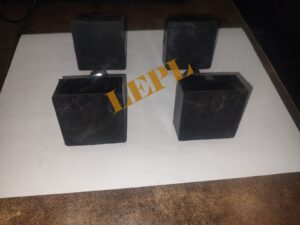
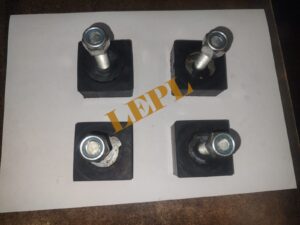
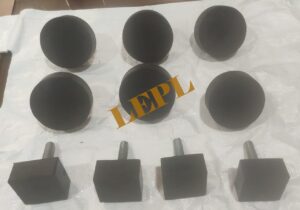
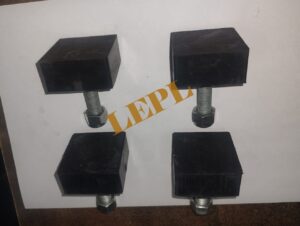
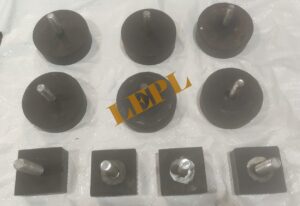
Anti-vibration pads work by absorbing shock, damping vibration, and isolating movement so that the force generated by the skip bucket or motor does not pass into the structure of the batching plant.
They achieve this through three main mechanisms:
- Shock Absorption
When the skip bucket lands (top or bottom), it creates a strong impact force.
How the pad works:
- The rubber or polyurethane material compresses under load.
- This compression absorbs the impact instead of letting it transfer into steel frames.
- After absorbing the shock, it returns to original shape.
Result:
Less noise, less wear, and reduced structural damage.
- Vibration Damping
When the skip bucket moves or the motor runs, it creates rapid vibration.
How the pad works:
- The material’s internal friction turns vibration energy into small amounts of heat, which is harmless.
- This reduces the vibration amplitude.
Result:
Smoother operation and less shaking in the plant.
- Vibration Isolation
The pad physically separates (isolates) the vibrating equipment from the surrounding structure.
How it works:
- The pad acts like a cushion layer between the source of vibration (skip / motor) and the structure.
- This breaks the path of vibration so it cannot travel through the steel frame.
Result:
More accurate weighing, better stability, and longer equipment life.
Why It Works
Anti-vibration pads are made from materials with special properties:
Elasticity → allows compression and rebound
Damping coefficient → controls vibration absorption
High load capacity → supports heavy skip buckets
Non-slip surface → ensures stability
These properties make them perfect for handling heavy, repetitive industrial loads.
Simple Example
When the skip bucket hits the top landing:
Without pad → strong impact → vibration → noise → frame damage
With pad → impact absorbed → reduced vibration → quiet operation → frame protected
Key Features of Anti-Vibration Pads (for Skip Bucket Applications)
- High Shock-Absorption Capacity
- Designed to absorb the heavy impact when the skip bucket lands.
- Reduces structural stress and prevents damage to steel frames and rails.
- Excellent Vibration Isolation
- Minimizes vibration caused by skip bucket movement, motors, and gear systems.
- Helps protect the batching plant structure and connected equipment.
- Durable, Industrial-Grade Material
Common materials:
- Natural rubber
- Neoprene
- Polyurethane (PU)
- Rubber–metal bonded laminates
Features:
- Long service life
- Resistant to tearing and compression
- Stable performance under heavy loads
- Weather and Chemical Resistance
- Withstands outdoor batching plant environments (heat, rain, dust).
- Resists exposure to cement dust, oil, grease, and moisture.
- High Load-Bearing Strength
- Engineered to support dynamic loads from the skip bucket.
- Maintains shape and function under repeated vertical impacts.
- Noise Reduction Capability
- Reduces impact noise when the skip lands.
- Makes plant operation quieter and safer for workers.
- Slip-Resistant Surface
- Grooved or textured surfaces help prevent pad movement.
- Ensures stable mounting for motors, frames, and landing points.
- Easy to Install and Replace
- Simple bolt-on or lay-in installation.
- Available in modular sizes for different landing and mounting points.
- Protection for Mechanical Components
- Reduces wear on motors, gearboxes, rails, wheels, and structural welds.
- Improves overall reliability of the skip system.
- Improves Weighing Accuracy
- By isolating vibration, it prevents disturbances to load cells.
- Helps maintain accurate batching performance.
In summary:
Anti-vibration pads are designed to be strong, durable, vibration-absorbing, weather-resistant, and easy to install, making them ideal for skip bucket shock and vibration control in batching plants.
Anti-vibration pads for skip bucket motors in concrete batching plants are specialized motor mounts designed to isolate vibrations from the electric hoist motor (typically 5–15 kW) driving the skip, preventing transmission to the motor base frame, gearbox, and overall plant structure.
Key specifications
Material: Oil-resistant NBR (nitrile butadiene rubber) or neoprene elastomer (55–70 Shore A hardness) bonded between galvanized steel plates for durability against grease, dust, and outdoor exposure; avoids natural rubber due to motor lubrication proximity.
Dimensions: Common sizes 100×100 mm to 150×150 mm plan area (L×W), with 12–20 mm rubber thickness; smaller 75×75 mm for lighter motors under 7.5 kW.
Load capacity: Rated 500–3000 kg per pad (static), with 1.5–2x safety factor for dynamic torque/vibration; 4–8 pads per motor base depending on frame size.
Performance ratings
Deflection: 3–8 mm under load for effective isolation at 10–50 Hz motor frequencies; high damping ratio (>0.1) to absorb startup/shock loads.
Temperature range: -20°C to +80°C continuous, suitable for Indian site conditions.
Mount type: Sandwich-style (rubber-steel-rubber) with central stud or bolt holes for secure fixing to motor foot and base plate.
Select pads matching your motor kW rating and base load; consult OEM (e.g., Schwing, Putzmeister) for exact match or test deflection on-site.