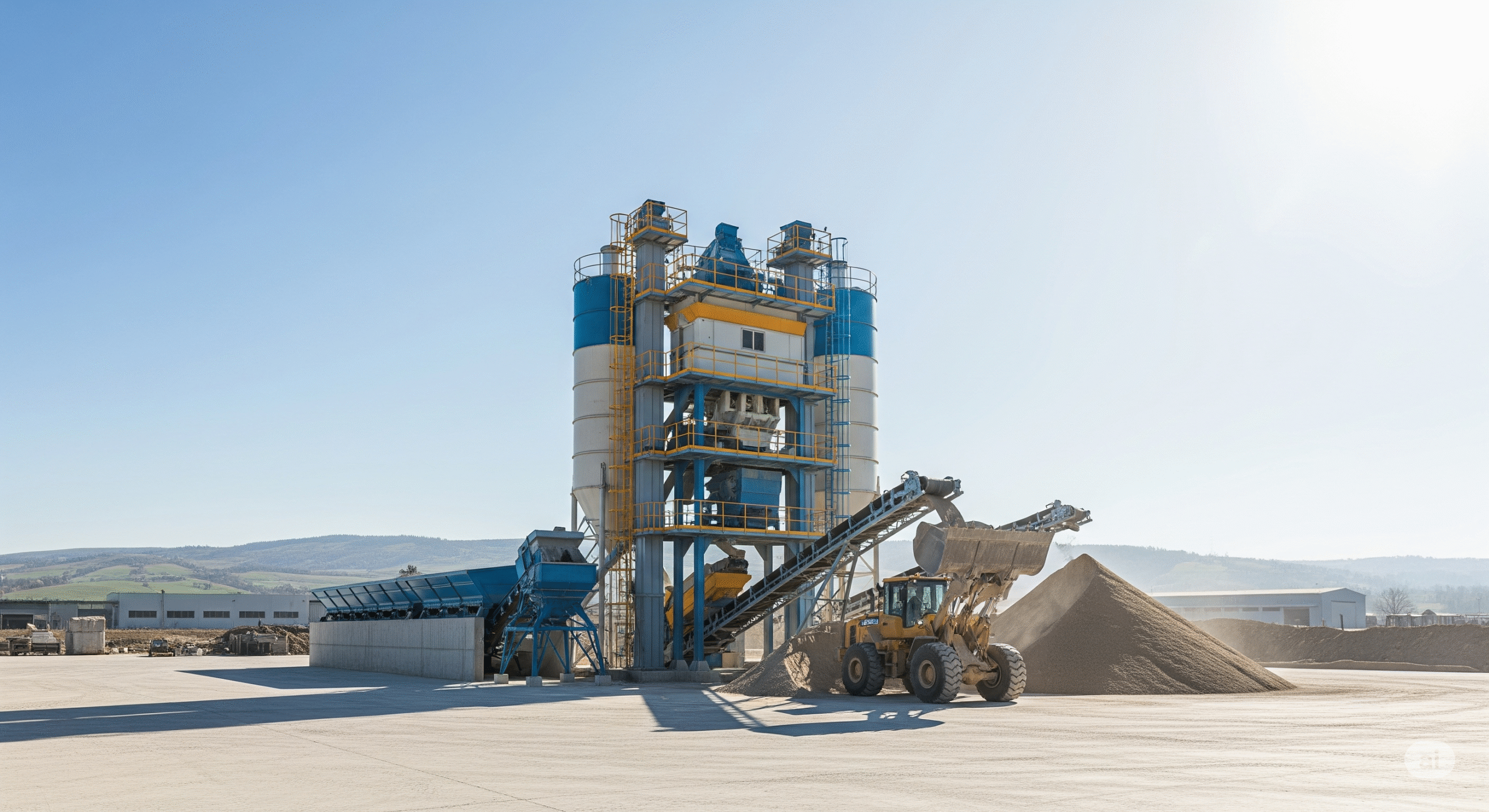
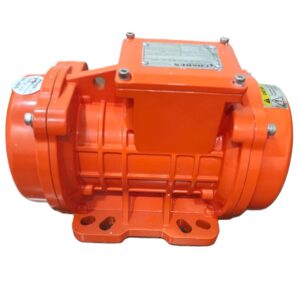
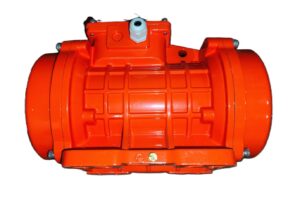
An electrical motor vibrator (also called an industrial vibration motor) is a key component in concrete batching plants. It generates controlled mechanical vibrations to ensure smooth material flow, prevent blockages, and improve compaction and mixing efficiency. Electrical motor vibrators are essential components in concrete batching plants, providing high-frequency vibrations to ensure efficient material flow and compaction.
An electrical motor vibrator is an electric motor with eccentric (unbalanced) weights mounted on its shaft. When the motor rotates, these weights create centrifugal force, producing vibration.
Below is a detailed explanation tailored to concrete batching plant applications.
These vibrators prevent material bridging and segregation in silos, hoppers, and bins by promoting uniform distribution of aggregates, cement, and other mixes. They consolidate concrete during batching, removing air pockets for denser, stronger output.
EMV is widely used in:
- Vibrator Feeder
- Construction Materials
- Sand/Cement Screening
- Material Milling
- Flow Conveyor
- Vibration Separator
- Hopper Emptying
- Bin Activator, etc.
A typical setup features an electric motor (AC single-phase or three-phase, 50/60Hz), eccentric weights for vibration generation, and a flexible shaft or direct mounting to hoppers. Motors like 30-100W series deliver 3,000-12,000 RPM for forceful output up to 2,000 pounds.
Electric Motor (Induction Motor)
- Usually 3-phase AC motor
- Designed for continuous duty (S1 duty)
Eccentric Weights
- Adjustable weights on both ends of the shaft
- Control vibration amplitude
Heavy-Duty Bearings
- Withstand high radial loads from vibration
Robust Housing
- Cast iron or aluminum
- Dustproof and waterproof (IP55, IP65, or higher)
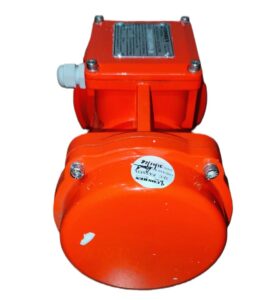
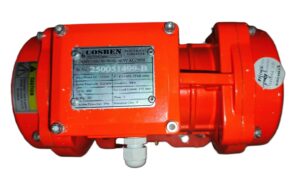
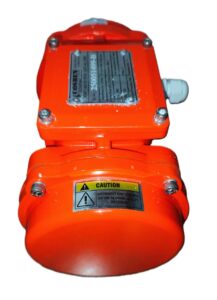
When powered:
- The motor shaft rotates at high speed (typically 750, 1000, 1500, or 3000 RPM).
- The eccentric weights rotate with the shaft.
- Centrifugal force is generated.
- This force produces oscillatory motion (vibration).
The motor spins eccentric weights, creating centrifugal force that vibrates the attached surface, fluidizing powder and aggregates to aid flow and mixing. In batching plants, they mount on hopper bottoms or sides, activated briefly to avoid over-vibration.
- Aggregate Bins
Prevents sand and aggregates from:
- Bridging
- Arching
- Sticking to hopper walls
Ensures continuous discharge.
- Cement Silos
Prevents:
- Cement lump formation
- Blockage at outlet
- Rat-holing
Improves material flow to screw conveyor.
- Weigh Hoppers
Ensures:
- Complete discharge
- Accurate batching
- No leftover material
- Vibrating Screens
Helps in:
- Aggregate size separation
- Removing oversize particles
- Compaction (Precast Units)
Used for:
- Concrete compaction
- Removing air voids
- Increasing density and strength
- Foot-Mounted Vibrator
Bolted to hopper or bin surface
Most common type in batching plants
2. Flange-Mounted Vibrator
Used for compact installations
3. External vs Internal Vibrators
External: Mounted outside structure (common in batching plants)
Internal (Needle Vibrators): Inserted into concrete (used on site, not in plant machinery).
Parameter | Range |
Power | 0.1 kW – 15 kW |
Speed | 750 – 3000 RPM |
Voltage | 380–415V (3-phase) |
Force | 1 kN – 100 kN |
Protection | IP55/IP65 |
Insulation Class | F or H |
Quality: World class materials durable sealing premium bearings strong body design-fem designed vacuum insulation 3d quality check
Efficiency: Optimised power weight ratio S1 continuous duty service optimized electric design.
Reliability: Specific grease retaining device tropicalised standard IP66 protection class F insulation.
Flexibility: Easy mass adjustment various voltages and frequencies available easy access to the terminal bon multiple eye-bolts.
- Prevents material blockage
- Improves batching accuracy
- Reduces manual intervention
- Increases productivity
- Ensures uniform concrete quality
- Low maintenance
- Mount on rigid surface
- Use high-tensile bolts
- Tighten bolts properly (recheck periodically)
- Use correct power supply
- Avoid overloading
- Ensure proper earthing
Incorrect installation can cause:
- Structural cracks
- Bolt loosening
- Bearing failure