Introduction:
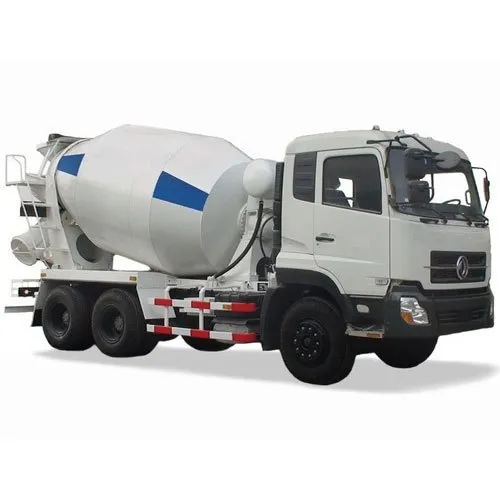
Water pumps used in transit mixers play a crucial supporting role in the transportation and quality control of ready-mix concrete. A transit mixer carries freshly batched concrete from the plant to the construction site, and the water pump ensures that water is available and accurately delivered when needed during transit or at discharge.
Purpose and Function
The primary function of the water pump in a transit mixer is to transfer water from the on-board water tank to the mixer drum or discharge chute.
This water is used for:
- Adjusting concrete workability (within permissible limits) during transit
- Drum washing after unloading concrete
- Chute and hopper cleaning at the site or batching plant
Proper water addition helps maintain the desired slump and consistency of concrete, especially during long transport times.
Types of Water Pumps Used
Common pump types in transit mixers include:
- Centrifugal pumps – Simple, reliable, and widely used for washing and water transfer
- Gear pumps – Provide controlled flow and are often hydraulically driven
- Electric or hydraulic pumps – Powered either by the truck’s electrical system or hydraulic circuit
The choice depends on mixer size, automation level, and manufacturer design.
Key Characteristics
Water pumps for transit mixers are designed to be:
- Robust and corrosion-resistant (due to water, cement dust, and harsh environments)
- Compact and low-maintenance
- Capable of delivering controlled flow and pressure
Many modern mixers integrate the pump with flow meters and control valves to ensure accurate water dosing and compliance with concrete quality standards.
Importance in Concrete Quality
Accurate and reliable water pumping is essential because excess or insufficient water can significantly affect concrete strength, durability, and setting time. For this reason, water pumps are considered a critical auxiliary system in transit mixers rather than just a cleaning component.
Applications
- Concrete Slump Adjustment (Most critical application)
- Water is added in a controlled manner into the mixer drum.
- Helps achieve the required workability/slump before discharge.
- Done through internal spray nozzles to ensure uniform mixing.
Why the pump is needed:
- Accurate water dosing
- Even distribution (no localized over-wetting)
- Washing & Cleaning of Mixer Drum (Internal)
- After concrete discharge, water is sprayed inside the drum.
- Prevents concrete buildup and hardening on drum blades and walls.
- Extends drum life and reduces maintenance downtime.
- Chute Cleaning (External)
- Water is pumped to:
- Main discharge chute
- Foldable extension chutes
- Ensures clean chutes before travel back to batching plant.
- Truck & Site Cleaning
- Water pump supplies pressurized water to:
- Hand-held wash hoses
- Spray guns
- Used to clean:
- Truck exterior
- Wheels
- Concrete spills on site (within site rules)
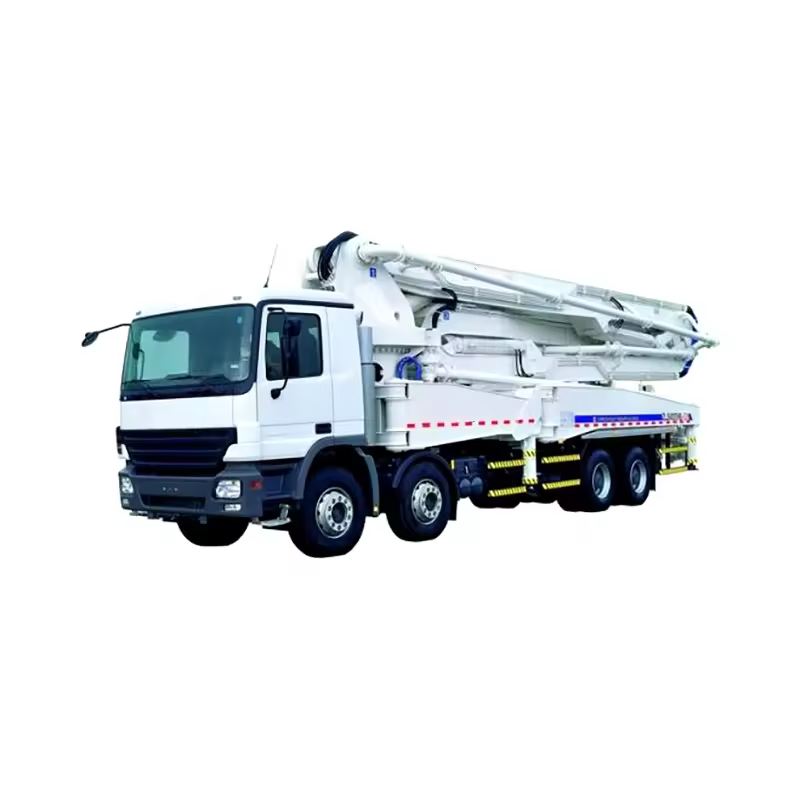
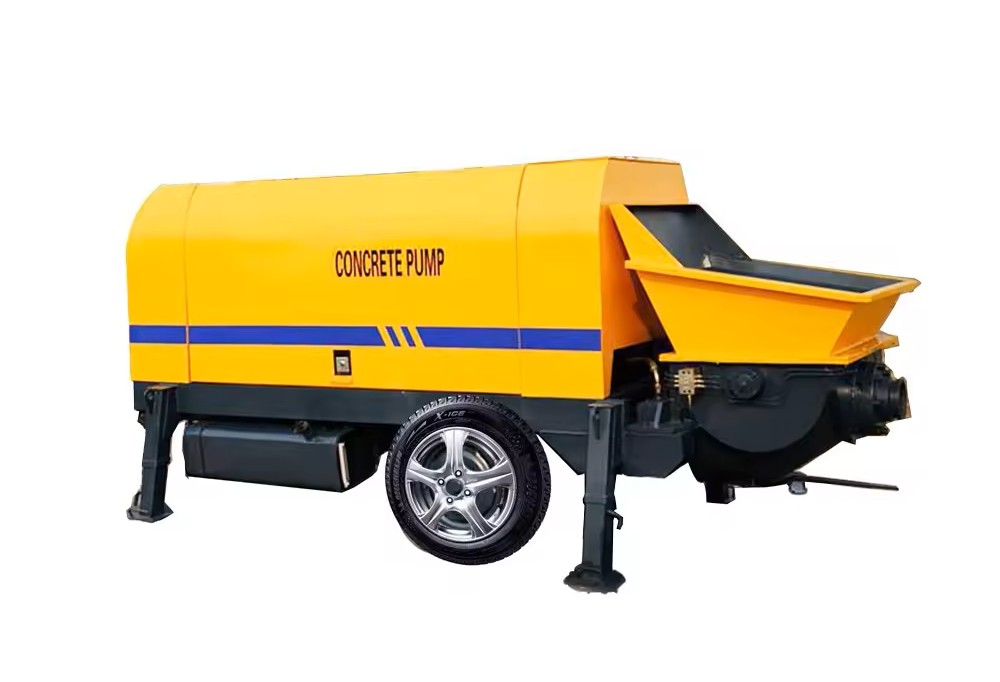
- Support to Concrete Pump Operations
Provides water for:
- Cleaning concrete pump hoppers
- Flushing pipelines (light cleaning)
- Washing pump accessories after pour completion
(Note: Not for high-pressure pipeline priming—that’s usually a separate system.)
- Water Supply for Admixture Mixing (Indirect use)
Water used to:
- Dilute liquid admixtures
- Clean admixture containers and lines
- Helps maintain dosing system accuracy.
- Dust Suppression on Site
- Water sprayed on:
- Dry concrete residues
- Truck movement areas
- Improves site safety and cleanliness.
- Emergency or Auxiliary Water Supply
- Used when no nearby water source is available:
- Light washing
- Tool cleaning
- Small construction needs
Application | Purpose |
Slump control | Achieve required concrete workability |
Drum cleaning | Prevent concrete buildup |
Chute cleaning | Maintain clean discharge path |
Truck/site wash | Clean equipment & spills |
Pump support | Clean hoppers & accessories |
Admixture handling | Dilution & system cleaning |
Dust suppression | Improve site conditions |
Auxiliary water | Backup water source |
Here’s a practical engineering overview of the typical materials of construction used for water pumps installed on transit mixers / concrete pump systems in the concrete placing industry.
Water pumps must resist abrasion, corrosion (water + admixtures), vibration, and pressure, so materials are chosen accordingly. Below is the practical engineering overview of the typical materials of construction used for water pumps installed on transit mixers / concrete pump systems in the concrete placing industry.
- Pump Casing & Main Structural Components
These are the most heavily loaded parts.
Cast Iron (CI)
- Grade: Often ASTM A48 Class 30–40 or equivalent.
- Why: Good strength, wear resistance, cost-effective.
- Use: Pump housing/frame on small to medium pumps.
Ductile Iron (DI)
- Grade: ASTM A536 (65-45-12) commonly.
- Why: Higher tensile strength and toughness than traditional cast iron → better abrasion resistance.
- Use: Impellers, volutes, intake housings.
Carbon Steel / Structural Steel
- Why: Strong, weldable, good for larger frames & brackets.
- Use: Mounting plates, support brackets, external framework.
- Impellers & Rotating Parts
These parts handle high-velocity water flow and possible entrained particles.
Hardened/Ductile Iron
- Most common choice.
- Sometimes surface hardened or sprayed for extra wear life.
Stainless Steel (SS)
- Grades: 304, 316 / 316L for aggressive environments.
- Why: Corrosion resistance (especially with water + additives or salt exposure).
- Use: High-end pumps, marine use, or where long life & corrosion resistance are priorities.
- Shafts, Fasteners & Bearings
Shafts
- Material: Carbon steel (Grade 1045 / 4140) or stainless steel for corrosion resistance.
- Finish: Ground & polished for seal compatibility.
Bearings
- Type: Deep groove / cylindrical roller.
- Material: Chrome steel (standard), sealed for dust/water protection.
Fasteners
- Grade: High-tensile alloy (e.g., Grade 8.8 / 10.9).
- Coating: Zinc or cadmium plating for corrosion resistance.
- Seals & Gaskets
Critical for preventing leaks and pump failure.
Mechanical Seals
- Faces: Carbon vs ceramic / silicon carbide.
- Elastomers: NBR (Nitrile), EPDM, FKM (Viton) depending on temperature/chemical exposure.
Packing
- Sometimes used in heavy construction pumps instead of mechanical seals.
- Material: PTFE, graphite.
- Piping, Connectors & Valves
Pipes & Fittings
- Schedule 40/80 carbon steel or stainless steel on higher-spec systems.
- Rubber/Camlock couplings for flexibility and vibration damping.
Valves
- Gate/Ball Valves: Steel or stainless for isolation.
- Check Valves: Often bronze/stainless internals to reduce wear.
- Surface Protection
Paint/Coating
- Epoxy primers + polyurethane topcoats for corrosion protection.
Hardfacing / Wear Liners
- Application: On casings and high-wear areas.
- Material: Tungsten carbide or chromium carbide overlays.
- Electrical & Control Components
(Not structural but integral to pump operation)
- Motor Housing: Cast aluminum or steel.
- Wiring & connectors: Rated IP65–IP67 for dust/water ingress.
- Sensors/Transducers: Stainless or sealed enclosures.
Summary Table
Component | Typical Materials |
Pump casing | Cast iron / ductile iron |
Impeller | Ductile iron, stainless steel |
Shaft | Carbon steel / SS |
Seals | Carbon/ceramic faces; NBR/EPDM/Viton |
Bearings | Chrome steel, sealed |
Piping/Valves | Carbon steel / stainless |
Coatings | Epoxy/polyurethane |
How it Works
The water pump on a transit mixer works on the centrifugal principle, where a rotating impeller imparts kinetic energy to water drawn from the onboard tank, converting it to pressure for washing the drum and chutes.
Suction and priming.
- Water enters the pump through a suction line connected to the transit mixer's water tank; a strainer or screen at the tank outlet prevents large debris from entering the pump.
- The impeller, driven by PTO or hydraulic motor, creates low pressure at the eye (center), drawing water into the vanes and starting the centrifugal acceleration.
Energy transfer and discharge
- As the impeller rotates (typically 1400–2900 RPM), water trapped between vanes is flung outward by centrifugal force, gaining high velocity and pressure before exiting the impeller into the volute casing.
- The volute casing collects and slows the high velocity water, converting kinetic energy to static pressure, which is then delivered through the discharge port to hoses, nozzles, or cleaning system.
System integration and operation
- The pump connects to the mixer's rear control station via valves for on/off flow control and pressure regulation; operator activates it during unloading or cleaning to spray high pressure water on drum interior, hopper, chutes, and discharge auger.
- Flow rate and pressure are matched to tank size and nozzle requirements, providing enough force to remove fresh concrete residue without high energy use.
Water pumps on transit mixers feature compact, robust designs optimized for quick cleaning and reliable operation in harsh construction sites, with emphasis on ease of use and durability.
Design and construction features
- Compact and lightweight casing: Cast iron or coated steel body sized to fit under the mixer chassis or hopper, minimizing weight impact on truck payload while handling vibration and road shocks.
- Self-priming capability: Can evacuate air from suction line and start drawing water from tank without manual priming, essential for fast site startup after idle periods.
- Corrosion and abrasion resistant internals: Bronze/brass impeller and protected shaft/seals tolerate water with cement fines and site chemicals during frequent washing cycles.
Performance and operational features
- Adequate flow and pressure: Delivers 150–400 LPM at 2–5 bar, providing forceful spray for drum/chute cleaning without excessive power draw from PTO or engine.
- Simple drive integration: PTO, hydraulic, or electric motor drive with direct coupling, allowing on demand operation synced with drum rotation or independent site use.
- Integrated safety and controls: Pressure relief valve to prevent overpressure damage, manual/automatic valves for flow control, and strainer to protect impeller from debris.
Maintenance and reliability features
- Easy access for service: Removable inspection covers, standard seal types, and bolt on mounting for quick impeller/seal replacement without major disassembly.
- Low maintenance seals: Mechanical seals or packing designed for long life in contaminated water, reducing downtime in field conditions.
- Universal compatibility: Standardized inlet/outlet ports and mounting patterns fit major mixer brands like Schwing Stetter, Sany, Apollo for spares trading.
These features ensure the pump supports daily cleaning cycles (2–4 washes per mixer per day) reliably.
Practical specification points
When preparing or sourcing these pumps for transit mixers, common specification lines include:
- Pump type (centrifugal/gear), drive type (PTO/hydraulic/electric) and rotation direction.
- Rated flow (LPM) and pressure (bar) at rated speed.
- Connection sizes for suction and discharge (e.g., BSP/metric flanges or hose tails).
- Materials of construction (casing, impeller, shaft, seal type) and temperature range.
Key Technical Specifications
Feature | Typical Requirement / Range |
Pump Type | Centrifugal (self-priming) |
Flow Rate | ~160–400 L/min (varies by mixer size) |
Operating Pressure | ~3.5–4 bar (50–60 psi) |
Drive Method | Hydraulic, PTO, electric motor |
Water Tank Capacity | ~450–720 L (location dependent) |
Hose & Fittings | High-pressure hoses with shut-off & nozzle valves |
Priming Capability | Self-priming preferred |
Material | Corrosion-resistant (cast iron/stainless impeller & shaft) |