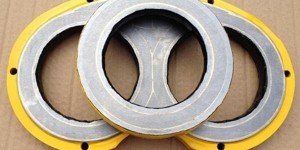
A wearing insert plate is a high-wear-resistant component installed inside the concrete pump's valve system. It works together with the wear ring (cutting ring) to seal the pumping chamber and withstand the abrasive action of concrete.
Wear plates (also called wear insert plates or wear liners) are replaceable components used in concrete pumps to protect key parts of the pumping system from the highly abrasive action of pumped concrete.
Concrete is extremely abrasive — the sand, gravel, and cement mixture constantly scrapes against metal surfaces as it's pumped under pressure. Wear plates are hardened metal inserts placed at the points of highest friction and impact so that when wear occurs, you replace an inexpensive plate rather than the entire (much more expensive) component.
- Resists abrasion: Protects the pump from wear caused by sand, gravel, and cement.
- Maintains sealing: Helps create a tight seal between the valve and the concrete cylinders, improving pumping efficiency.
- Extends pump life: Reduces wear on more expensive pump components.
- Maintains pressure: Prevents concrete leakage and helps the pump maintain its rated output.
Wearing insert plates are typically made from:
- High-chromium cast iron
- Tungsten carbide–reinforced steel
- Hardened alloy steel
- Carbide-faced composite materials
Many premium wear plates have a tungsten carbide wear surface, which significantly increases service life.
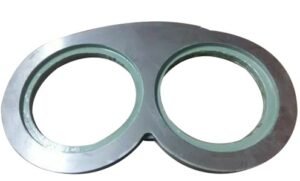
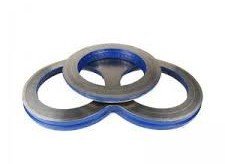
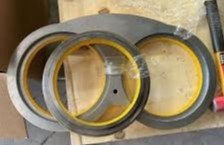
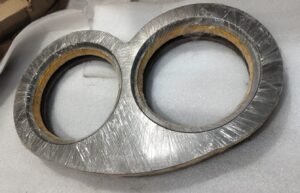
- Mounted on the hopper's rear wall; shaped like a figure-eight or spectacles (hence the name), since it has two openings that align with the two delivery cylinders.
- A hydraulic system maintains constant contact pressure between the cutting ring and wear plate to prevent slurry (the liquid cement/water mix) from leaking backward and to prevent air from being drawn in, both of which reduce pumping efficiency.
- In an S-valve concrete pump (the most common design), the wear plate is mounted at the end of the hopper where the S-tube contacts it. As the S-tube swings back and forth, it rubs against the wear plate, making it one of the highest-wear components in the machine.
A worn insert plate can cause:
- Reduced pumping pressure
- Concrete leakage
- Lower pumping efficiency
- Increased hydraulic load
- Difficulty maintaining output
The service life depends on:
- Concrete mix (aggregate size and hardness)
- Pumping pressure
- Pumping hours
- Material quality of the wear plate
Under typical operating conditions, wear plates may last anywhere from 20,000 to over 100,000 cubic meters of pumped concrete, especially if carbide-reinforced. Actual life varies widely by application and manufacturer.
- Wear ring (cutting ring)
- Wear plate
- S-tube seals
- Hopper wear
These parts are often inspected and replaced together to maintain proper sealing and maximize pump performance.
Selecting the wear plate (wearing insert/wear plate assembly) between the concrete delivery cylinder and the S-valve (rock valve) is an engineering decision based on wear resistance, sealing performance, pump pressure, and concrete characteristics—not just dimensions.
- Match the pump model
The wear plate must match:
- Pump manufacturer and model
- S-valve geometry
- Delivery cylinder bore
- Mounting hole pattern
- Wear ring dimensions
Even small dimensional differences can cause leakage and premature wear.
- Consider the concrete being pumped
Concrete Type | Recommended Wear Plate |
Normal concrete | High-chromium cast iron |
M40–M80 concrete | Carbide-faced wear plate |
SCC (Self-Compacting Concrete) | Carbide-faced with precision finish |
Abrasive aggregates (basalt, granite) | Tungsten carbide insert |
Lightweight concrete | Standard high-chrome plate |
- Check operating pressure
Higher pumping pressures require harder, more wear-resistant materials.
Pump Pressure | Material |
<80 bar | High-chrome cast iron |
80–150 bar | High-chrome alloy (60–65 HRC) |
>150 bar | Tungsten carbide–reinforced wear plate |
- Material selection
Typical materials include:
- High-chromium white cast iron (20–28% Cr)
- Ni-Hard cast iron
- Tool steel with hardfacing
- Tungsten carbide inserts or carbide overlay
Desired hardness:
- Wear plate: 60–65 HRC
- Carbide surface: 1,100–1,600 HV (approx.)
- Ensure sealing compatibility
The wear plate must be compatible with:
- Wear ring
- S-valve face
- Delivery cylinder
- Hydraulic clamping force
Poor compatibility causes slurry leakage and pressure loss.
- Consider expected life
Choose based on annual concrete output.
Annual Pumping | Suggested Material |
<20,000 m³ | Standard high-chrome |
20,000–60,000 m³ | Premium high-chrome |
>60,000 m³ | Tungsten carbide–reinforced |
- Evaluate maintenance cost
A higher-cost carbide wear plate may provide significantly longer service life, reducing downtime, labor, and replacement frequency.
Selection checklist
- ✔ Correct pump make and model
- ✔ Delivery cylinder diameter
- ✔ Maximum pumping pressure
- ✔ Concrete strength and abrasiveness
- ✔ Aggregate size and type
- ✔ Pumping frequency (m³/year)
- ✔ Wear plate material and hardness
- ✔ Compatibility with wear ring and S-valve
- ✔ Expected service life
- ✔ Availability of spare parts
Example
For a concrete pump handling M60 concrete with granite aggregate at 160 bar and 80,000 m³/year, a suitable choice would be:
- Tungsten carbide–reinforced wear plate
- Hardness: 60–65 HRC substrate with carbide wear surface
- Precision-machined sealing face
- Matching carbide wear ring
This combination provides high wear resistance, reliable sealing, and longer service life under abrasive, high-pressure operating conditions.
For a new concrete pump design, the wear plate should be selected alongside the S-valve, wear ring, delivery cylinder, hydraulic clamping force, and expected concrete mix, as these components function as a wear system rather than independent parts.