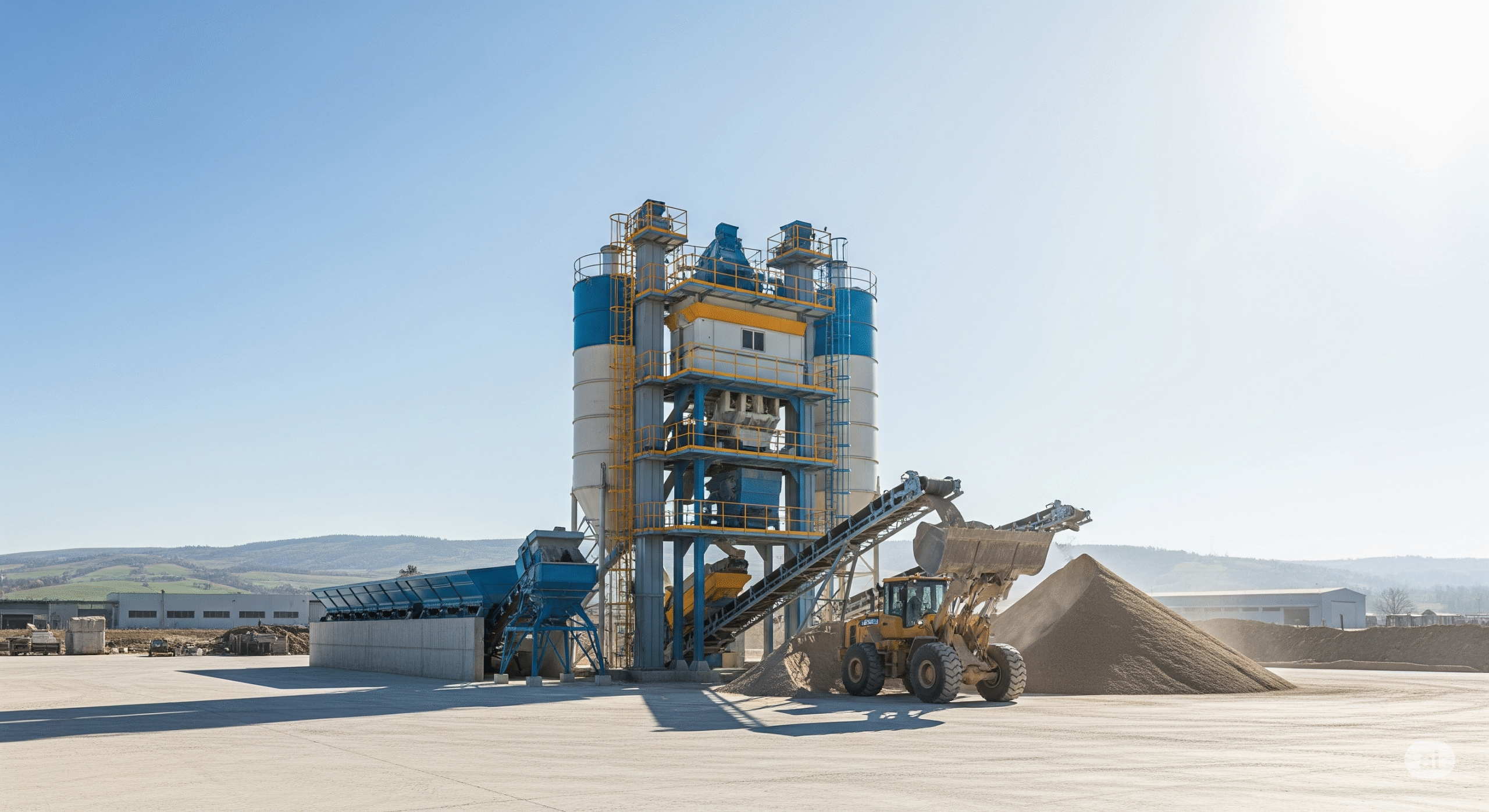
Cement and fly-ash silos are vertical bulk-storage vessels in Indian concrete batching/RMC plants. They store dry cementitious powders, then discharge them—typically through a screw conveyor—into the plant’s weighing and mixing system.
There are different types of cement silos such as the low-level mobile silo and the static upright cement silo, which are used to hold and discharge cement and other powder materials such as Fly Ash, Silica & GGBS. The low-level silos are fully mobile with capacities from 50 to 100 tons. They are simple to transport and are easy to set up on site. These mobile silos generally come equipped with an electronic weighing system with digital display and printer. This allows any quantity of cement or powder discharged from the silo to be controlled and also provides an accurate indication of what remains inside the silo.
The static upright silos have capacities from 100 to 300 tons. These are considered a low-maintenance option for the storage of cement
or other powders. Cement silos can be used in conjunction with bin-fed batching plants.
A silo receives bulk cement or fly ash by tanker/pneumatic loading, protects it from moisture, and feeds a controlled quantity to the batching plant. Fly ash is commonly stored in a separate silo so it can be batched accurately as a supplementary cementitious material.
Important Components with its Purpose
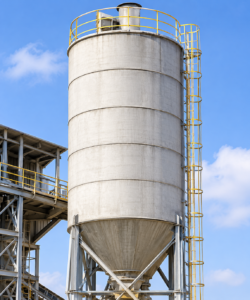
- Cylindrical steel body - Stores cement, fly ash, GGBS, or other fine powder; commonly mild steel/IS 2062-grade construction.
- Supporting legs - Elevate the silo and provide clearance for the discharge system.
- Conical hopper - Directs material toward the outlet.
- Butterfly discharge valve - Controls flow from the silo to the screw conveyor.
- Screw conveyor - Transfers powder to the cement/fly-ash weighing hopper.
- Dust collector/filter - Controls dust during tanker filling and venting.
- Pressure-relief valve - Protects the silo from overpressure during pneumatic loading.
- Level indicator - Shows fill level and helps prevent overfilling or unexpected emptying.
- Aeration/fluidising pads - Help cohesive fly ash flow freely toward discharge.
- Manhole and ladders - Provide access for inspection and cleaning.
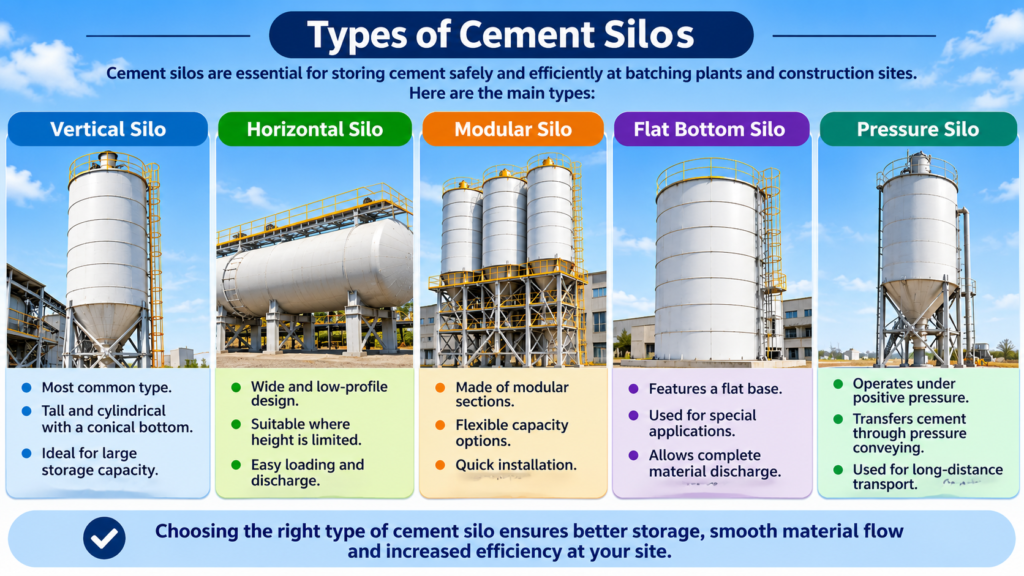
Indian suppliers commonly offer silos from about 30 to 200 tonnes, with 50, 60, 80, 100, 150, and 200-tonne units being typical for RMC plants. Larger bolted silos can extend to roughly 300 tonnes or more, depending on the manufacturer and site requirements.
- Small/mobile batching plant - 30–50 t cement silo; separate smaller fly-ash silo if used.
- Standard RMC plant - 100–150 t cement silo, often with a 50–100 t fly-ash silo.
- High-output RMC plant - 150–200 t or multiple silos, sized around peak daily concrete demand and delivery reliability.
Welded silos arrive largely preassembled, suit faster installation, and are commonly available in roughly 30–200 t capacities.
Bolted/panel silos are shipped in segments and assembled on site, which can reduce transport cost and simplify handling; they are useful for larger capacities or constrained delivery routes.
Horizontal/containerised silos are an alternative where height clearance, transport, or rapid relocation is important.
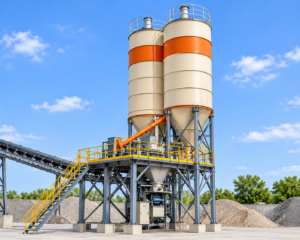
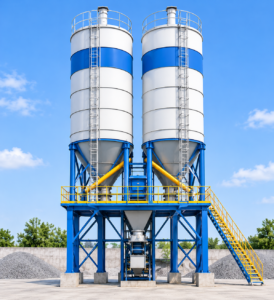
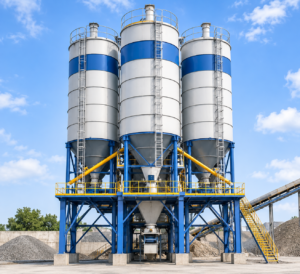
Choose capacity based on peak concrete output, cement/fly-ash consumption, tanker delivery frequency, site space, and the need for buffer stock. Manufacturers specifically recommend considering maximum storage volume, timely material availability, maximum concreting volume, road/traffic restrictions, and weather conditions.
For example, a plant producing high volumes may use a 100–150 t cement silo plus a separate 50–100 t fly-ash silo, rather than relying on one combined silo—this preserves independent inventory control and batching flexibility.
When buying in India, specify:
- Material: cement, fly ash, GGBS, limestone powder, or multiple powders.
- Capacity in tonnes and required working volume.
- Welded or bolted construction.
- Discharge height and matching screw-conveyor length/diameter.
- Dust-collection requirement and pressure-relief protection.
- Level instrumentation, aeration system, and vibrator/arch-breaker provisions.
- Foundation requirement: conventional foundation or mobile steel foundation.
- Compliance with applicable wind, seismic, and structural-design requirements.
Cement and fly ash silos are available in capacities of 100 MT and 150 MT, respectively, while double-discharge silo configurations can be designed for storage capacities ranging from 50 MT to 300 MT. The final pricing and technical specifications are subject to variation based on the required storage capacity, shell plate thickness, structural design, discharge arrangement, auxiliary equipment, and site-specific installation requirements.